


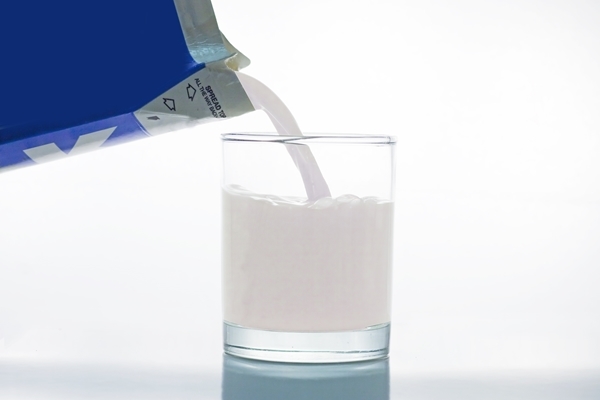
AFLATOXIN M1 IN MILK PRODUCT
| Common Test | Aflatoxin B1, B2, G1, G2* Total Aflatoxin Alfatoxin M1, M2* |
|---|---|
| Method | In house method (LC Method) & Direct Competitive Elisa Method |
| Sample Size | 200g - 300 g |
| Transportation | Original packing or repack with clean plastic container. |
| Accreditation | Yes, symbol * denote as not accredited |
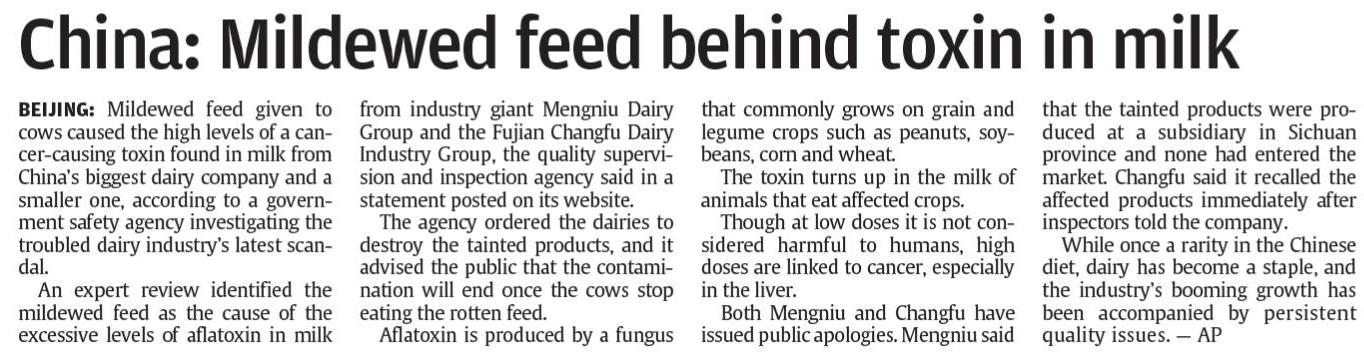
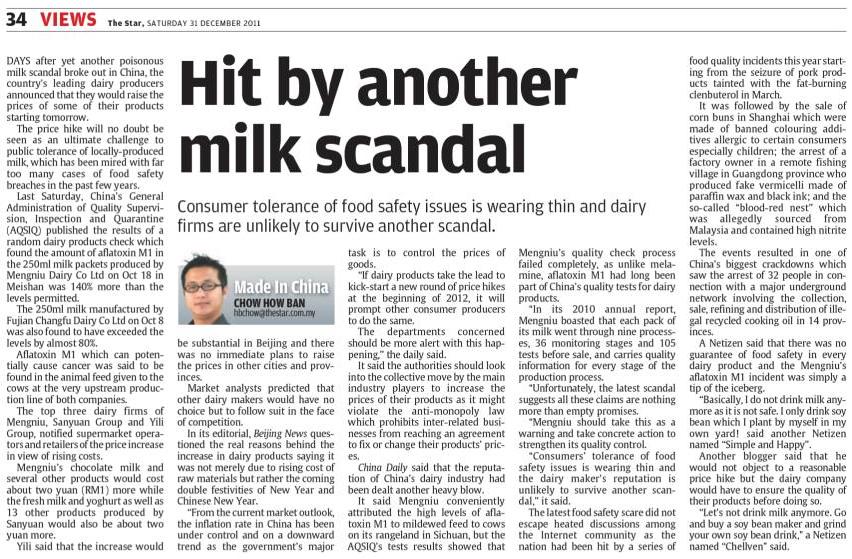
Aflatoxins are toxic metabolites produced by a variety of molds such as Aspergillus flavus and Aspergillus parasiticus. Aflatoxins have been associated with various diseases, such as aflatoxicosis. They are carcinogenic and can be present in grains, nuts, cottonseed, crops and other commodities associated with human food or animal feeds. This discovery has led to a growing awareness of the potential hazards of these substances as contaminants of food and feed causing illness and even death in humans and other mammals. these studies also revealed that there are four major aflatoxins: B1, B2, G1, G2 plus two additional metabolic products, M1 and M2, that are of significance as direct contaminants of foods and feeds.
Contamination happen when cows are fed with contaminated feed aflatoxin B1, B2, G1, G2, then aflatoxin B1 is converted by hydroxylation to aflatoxin M1, which is subsequently secreted in the milk of lactating cows. Aflatoxin M1 is quite stable towards the normal milk processing methods such as pasteurization and if present in raw milk, it may persist into final products for human consumption. Most controlling government agencies worldwide have regulations regarding the amount of aflatoxins allowable in human and animal foodstuffs. Many countries have declared limits for the presence of aflatoxin M1 in milk and milk products. In the EU the limit for the presence of M1 in milk and reconstituted milk powders has been set at 0.05 mg/L or 50 parts per trillion (50 ppt.)
TOTAL POLAR COMPOUND
| Common Test | Total Polar Compound * |
|---|---|
| Method | In house method |
| Sample Size | 200g - 300 ml |
| Transportation | Original packing or repack with clean plastic container. |
| Accreditation | No, symbol * denote as not accredited |
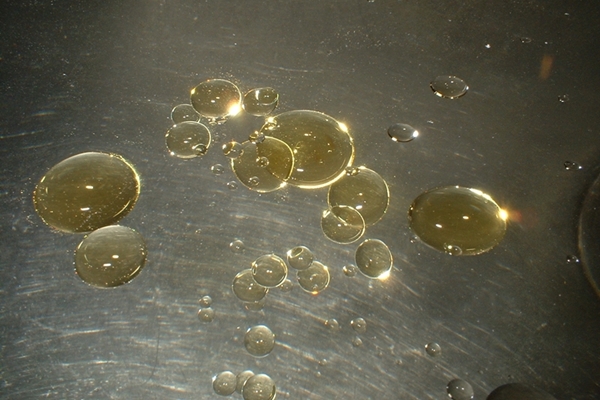
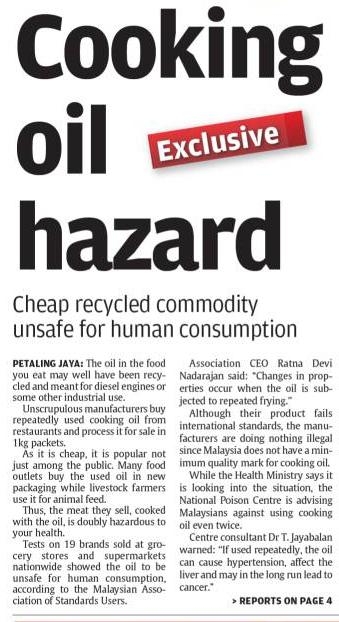
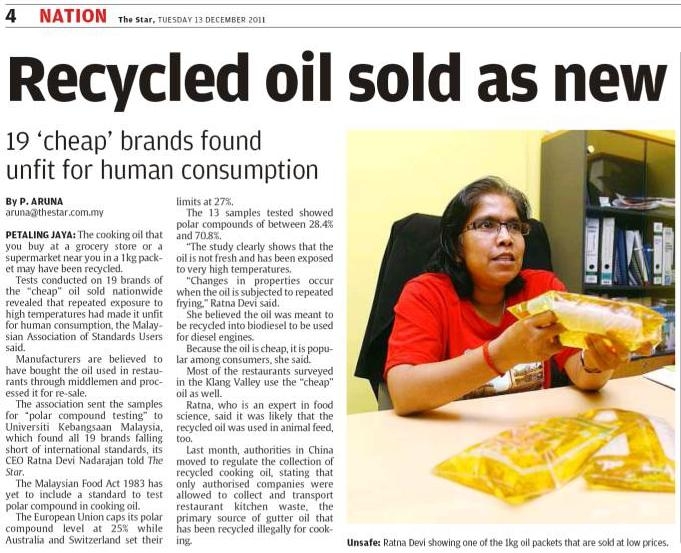
Deep frying is a cooking method in which food is submerged in hot oil or fat. Overheating or over-using the cooking oil can pose hazards due to oil deterioration, polymerization, oxidation, and harmful components formation such as acrylamide. Deterioration of cooking oils is generally followed by changes in color of the used oil, free fatty acid level, an increase in trans fat, Polycyclic aromatic hydrocarbons (PAHs) and polarity of the oil.
The level of polar components or total polar compounds is a good indicator to determine the quality of oil. The maximum levels for polar compounds of cooking oils is at 25g/100 g oil or 25%
TOXIC POOP FOUND IN BIRD'S NEST
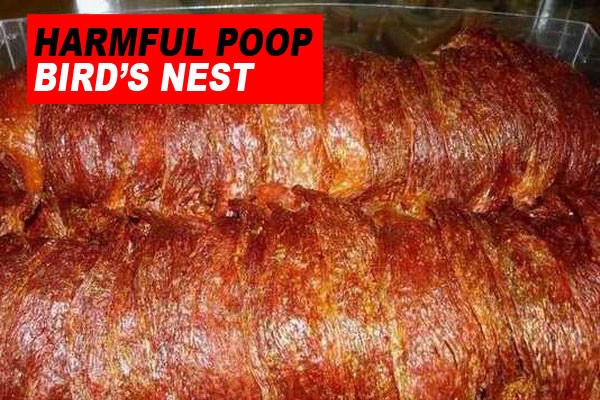
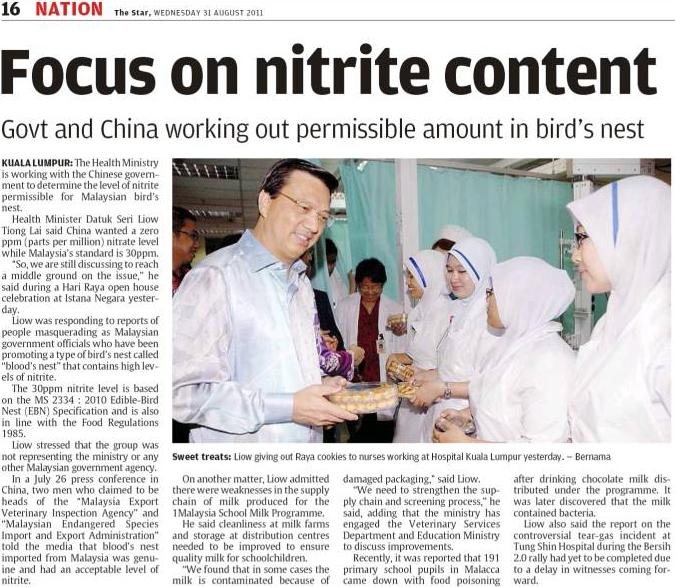
People who believe in taking bird’s nest as tonics may have another hazard to look out for. According to the Deputy Minister of Agriculture in Malaysia, Cai Zhi Yong, red blood bird’s nest is not actually stained red by blood. He explains that the red colour actually comes from the bird's nest being contaminated by bird droppings. This phenomenon has led to a black market where unscrupulous dealers artificially create red blood bird's nest by using a preservative made from bird's poop. This preservative acts as a red pigment which is used to disguise ordinary and cheaper bird’s nest. The preservative contains hydrochloric acid nitrate that exceeds the acceptable amount for human consumption.
According to Malaysia's Ministry of Health, food must not contain more than 70ppm of the substance, but red blood bird's nest may contain up to 2,220ppm of the toxic chemical. Local retailers are on the lookout to prevent the import of these dangerous and treated red blood bird’s nest. An experienced bird’s nest dealer, Lin Ming Jian, says: “This kind of fake treated bird’s nest will not expand after being soaked in water, unlike the real deal which can expand up to 7 – 8 times. The pigment will seep out quickly too.” Up to 70% of the bird’s nest in Singapore is imported from Indonesia. The rest comes from Malaysia and Thailand. There are several common beliefs concerning red blood bird’s nest. One belief is that the swallows spit blood after they eat lotus seeds, and the spit stains their nests red. Another belief is that the nests are stained red by the minerals from the rock walls that the nests are built on.
BIRD'S NEST SCARE
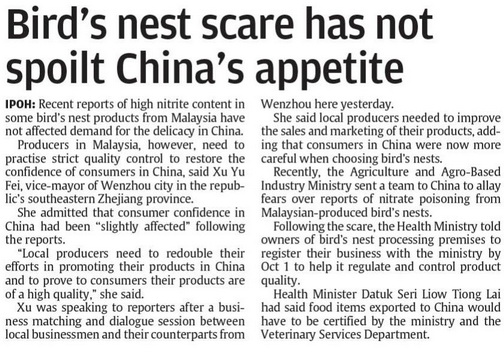
BIRD'S NEST NITRITE CONTENT
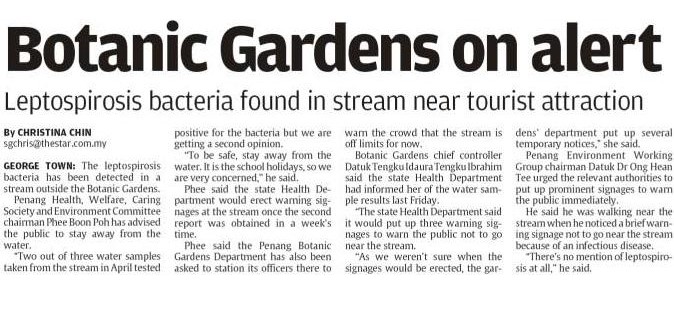
BOTANIC GARDEN LEPTOSPIROSIS
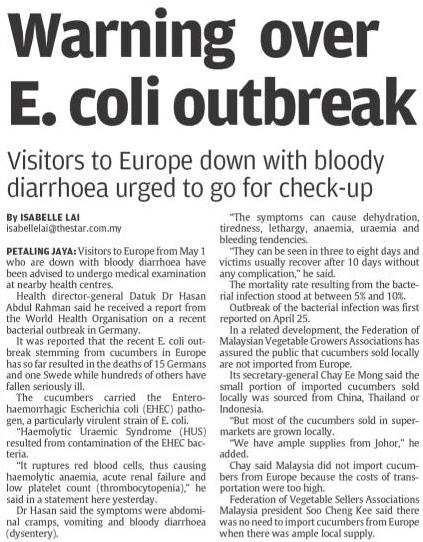
E-COLI OUTBREAK
DEHP TESTING
| Common Test | Bis(2-ethylhexyl)phthalate testing (DEHP testing) Diisononyl Phthalate testing (DINP testing) Phthatale family / Di-n-butyl Phthalate testing (DBP testing) Benzylbutylphthalate testing (BBZP testing) Dimethyl Phtrhalate testing (DMP testing) Di-octyl Phthalate testing (DOP testing) Diethylhexyl Phthalate testing (DEP testing) Diicodecyl Phathalate (DIDP) |
|---|---|
| Method | GCMS |
| Sample Size | 100 - 200 ml |
| Transportation | Original pack or pack with sterilized container. |
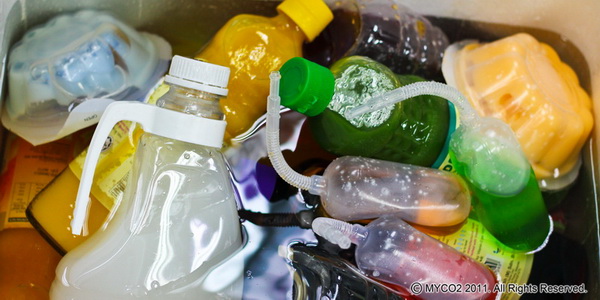
Bis(2-ethylhexyl)phthalate or diethylhexyl phthalate, commonly abbreviated DEHP, is an organic compound with the formula C6H4(C8H17COO)2. Taiwan's Department of Health reported to the administration on 24th May 2011 that an emulsifier used in the drinks produced by Taiwanese company was discovered to contain DEHP which has been banned as a food additive since 1999. The emulsifier is a legal food additive in fruit juice, jam and soft drinks but some manufacturers used DEHP as emulsifier to save costs. The scare over a cancer-causing plastic additive in food and drink products from Taiwan has spread to the many importing country. Thousand of beverage bottles suspected of contamination had been recalled.
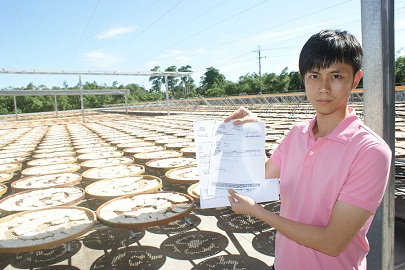
DOH to determine source of maleic acid in food
A Tainan City-based noodle maker holds documentation from his flour suplier May 27 showing his product is free of additives. (CNA)Publication Date: 06/10/2013
Source: Taiwan Today
Write to Taiwan Today at ttonline@mofa.gov.tw
| Common Test | Maleic Acid |
|---|---|
| Method | HPLC |
| Sample Size | 100 - 200 g |
| Transportation | Original pack or pack with sterilized container. |
Following the discovery by Singaporean authorities of maleic acid in a third batch of Taiwan-made food products, the ROC Department of Health said June 9 it was important to determine how the substance entered the food before taking further action.
Maleic acid is legally permitted in food containers and packaging and could have leached from the packaging into the food, and it is also present at low concentrations in permitted food additives such as malic acid and fumaric acid. It could also have been produced by a chemical reaction during the production process, the DOH said.
“Maleic acid could have entered the food from the production process due to repeated use of food processing equipment for different recipes,” said Chen Chin-cheng, a professor in Tainan City-based National Cheng Kung University’s Department of Chemical Engineering. “What’s important is to set a safety limit for the presence of such substances in food.”
The EU sets a limit of 30 parts per million for the presence of maleic acid in containers or packaging materials, the DOH said, adding that there are several ways the maleic acid could have entered the product in a legitimate manner.
In addition to a possible presence in malic acid and fumaric acid, as well as leaching from the packaging, maleic acid may be produced by fermentation or by the Maillard reaction, a natural browning process resulting from a chemical reaction between an amino acid and a reducing sugar.
Different countries have different standards for the presence of additives in food, the DOH said. It cautioned importers and exporters be aware of and adhere to destination countries’ standards, adding that discrepancies between nations can be resolved through formal trade negotiation channels.
The DOH stressed that it will continue to investigate if any unapproved additives are being used in food. If such illegal use is determined, offenders will be prosecuted in accordance with the law, no matter what levels of illegal substances are found, and the products will be destroyed.
The latest Taiwan food products discovered by the Agri-Food and Veterinary Authority of Singapore to contain maleic acid were three types of noodle produced by Sun Chi Foods Industrial Co. Ltd. (SDH)
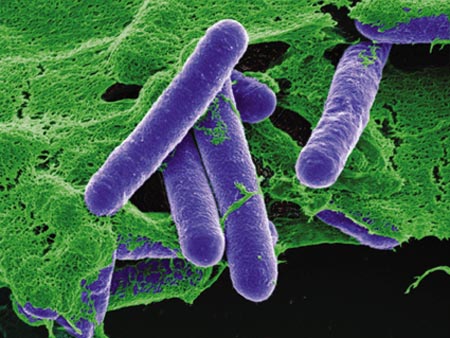
CLOSTRIDIUM BOTULINUM
| Common Test | Clostridium botulinum * Test Accredited |
|---|---|
| Method | FDA-BAM Chapter 17 |
| Sample Size | 100 - 200 g |
| Transportation | Original pack or pack with sterilized container. |
(CNN) -- China has halted imports of some New Zealand milk powders after a company disclosed that three batches of an ingredient used in sports drinks and baby formula tested positive for a strain of bacteria that causes botulism.
The New Zealand-based Fonterra Group said Saturday that three batches of its whey protein tested positive for the Clostridium botulinum bacteria. Those batches weren't for use in Fonterra-branded products, but they said companies that used the whey protein in their products might issue recalls.
Fonterra, the world's largest dairy exporter, said it had warned companies that bought the whey protein about the problem. "As a result, these customers are urgently investigating whether any of the affected product, which contains a strain of Clostridium, is in their supply chains," the company said.
Three of those clients have told Fonterra that their products are safe.
"Our technical teams have been working closely this weekend with Coca-Cola, Wahaha and Vitaco and have established that the process used to manufacture their products would kill the bacteria that was in the affected whey protein concentrate," Gary Romano, Fonterra's managing director of NZ Milk Products, said in a company statement. Wary Chinese mothers buy breast milk online.
But China -- where at least six babies died from tainted milk powder in 2008 -- has halted all imports of New Zealand milk powders from New Zealand and Australia, New Zealand's Trade Minister Tim Groser said in an interview on television network TVNZ on Sunday.
But in an update on its website, the New Zealand Ministry for Primary Industries clarified that Chinese authorities had suspended imports of Fonterra-produced Whey Powder and Dairy Base powder, while also increasing inspection and supervision of New Zealand dairy products.
"China has not closed the market to all New Zealand dairy products," the ministry said. "And it has also been quite specific about the range of Fonterra products which it has temporarily suspended."
Dairy is a key industry in New Zealand, making up about 3% of its GDP. The Trade Ministry said Australia, Malaysia, Saudi Arabia, Thailand and Vietnam also imported the product.
Botulism can be fatal, with symptoms typically beginning within 36 hours of consuming contaminated food. The infection can result in paralysis and respiratory failure, according to the U.S. National Institutes of Health.
In the 2008 scandal, milk powder was contaminated with melamine,a chemical commonly used in laminates, wood adhesives and flame retardants that can be used to mimic high-protein additives. Chinese authorities arrested more than 18 people and executed two in the contamination scandal, which saw thousands sickened in addition to the infant deaths.
The company involved, Sanlu Group, was partially owned by Fonterra. Sanlu group later filed for bankruptcy.
Two years later, a Fonterra-supplied company in China faced scrutiny over claims that their milk powder led to premature sexual development in infant girls. At the time, Fonterra said it remained "100% confident about the quality of its products."